


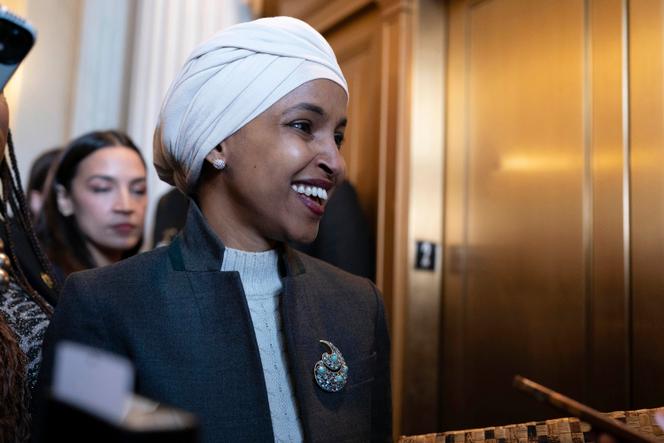

Ilhan Omar’s Background as a Refugee and Her Rise to Congress
Few political stories in modern America reflect the nation’s evolving identity as clearly as the journey of Ilhan Omar. From a childhood shaped by displacement to becoming one of the first Muslim women elected to the U.S. Congress, Omar’s rise represents both the promise and the complexity of the American story.
Her path has been marked by resilience, controversy, advocacy, and historic milestones. Whether one agrees with her politics or not, her biography is undeniably significant.
Let’s take a closer look at her background as a refugee and the road that led her to national office.
Early Life in Somalia and Civil War
Ilhan Omar was born in 1982 in Mogadishu, Somalia. Her early childhood coincided with increasing political instability in the country. By the early 1990s, Somalia had descended into civil war, forcing millions to flee.
Like many Somali families at the time, Omar’s family sought safety. She has spoken publicly about the trauma of displacement and the uncertainty that defined her early years.
Her father, a former educator, played a central role in her upbringing. Omar has often described him as someone who emphasized civic engagement and political awareness even during times of hardship.
Life in a Refugee Camp

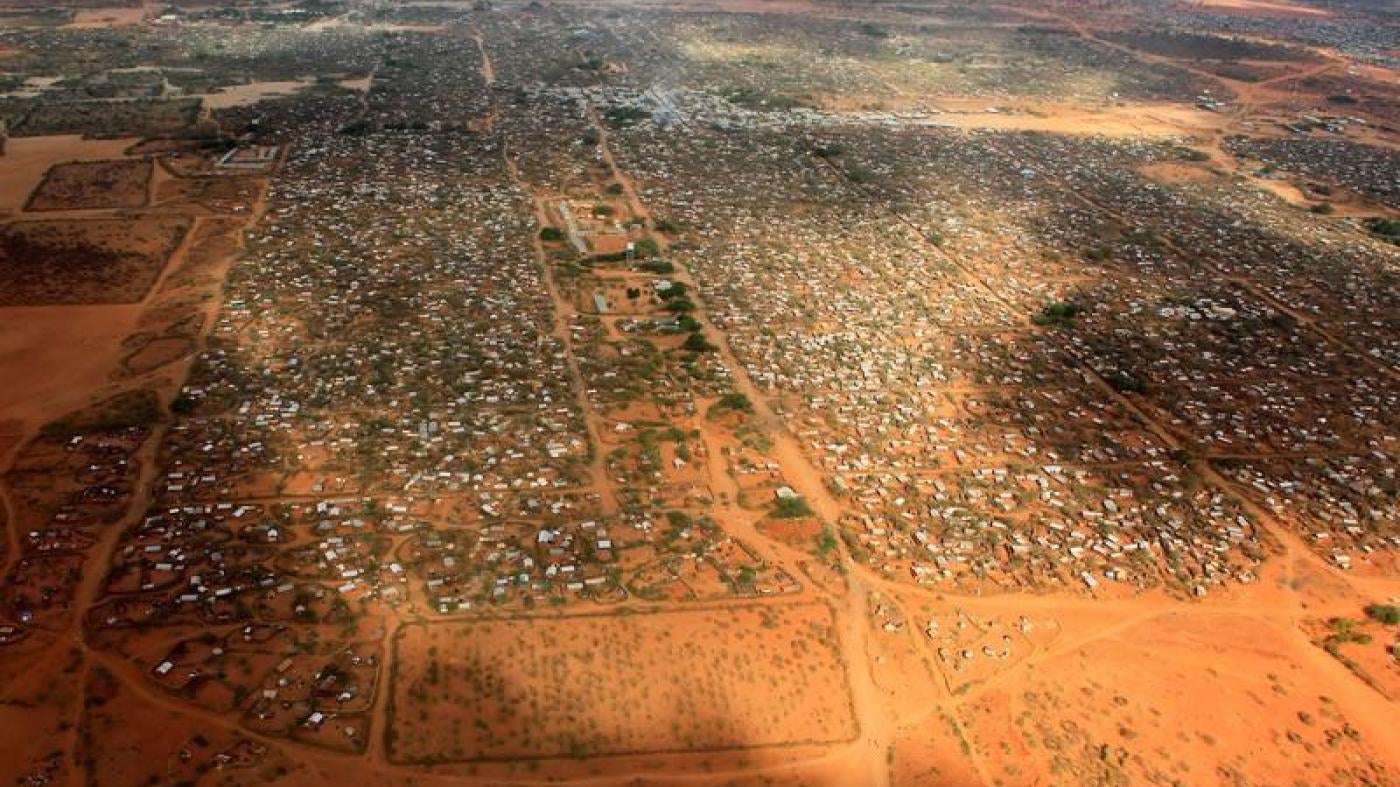
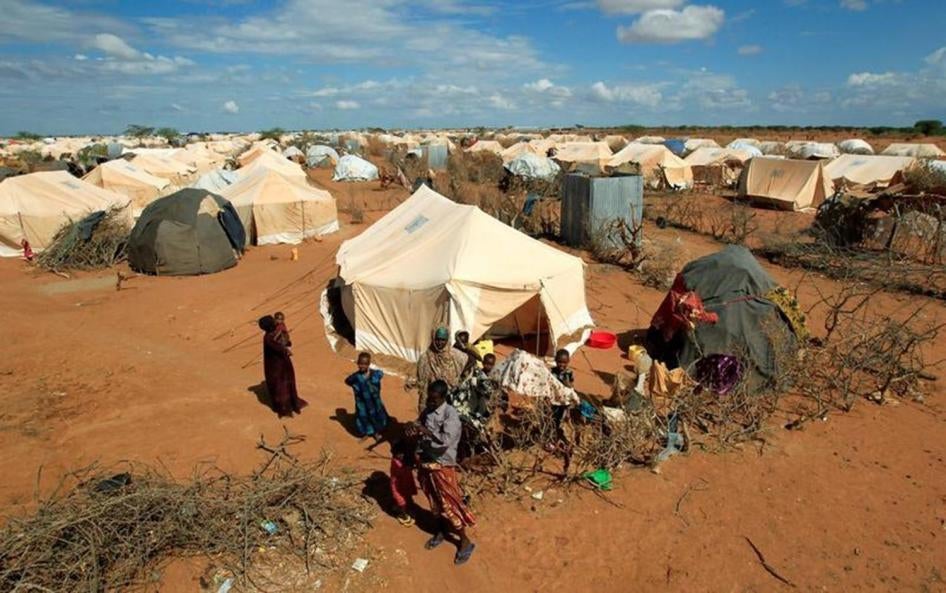

Before arriving in the United States, Omar and her family spent several years in a refugee camp in Kenya. Refugee camps during that period were overcrowded and under-resourced, housing people who had fled violence with little more than what they could carry.
Life in a refugee camp often involves:
Limited access to education
Restricted economic opportunity
Basic shelter and humanitarian aid
Uncertainty about the future
For Omar, these formative experiences shaped her understanding of displacement, migration, and global conflict.
Arrival in the United States
In 1995, when Omar was about 12 years old, her family was resettled in the United States through the refugee program. They eventually made their home in Minneapolis, Minnesota—a city that would later become central to her political identity.
Minnesota has one of the largest Somali-American populations in the country. For refugee families, community networks can provide cultural familiarity and mutual support while adjusting to American life.
Omar has described learning English within a few months of arriving and navigating American school systems as both challenging and transformative.
The contrast between refugee camp life and American opportunity left a lasting impression.
Education and Early Civic Engagement
Omar attended North Dakota State University before earning a degree in political science and international studies from the University of Minnesota.
Her interest in politics developed early. She has spoken about translating for her grandfather at civic meetings, helping him understand local democratic processes. That experience—bridging language and systems—introduced her to grassroots engagement.
Before running for office, Omar worked in community organizing and served as a policy aide for Minneapolis City Council member Andrew Johnson.
Her work focused on:
Education equity
Economic opportunity
Housing stability
Community development
These issues would later define much of her political platform.
Historic Election to the Minnesota Legislature
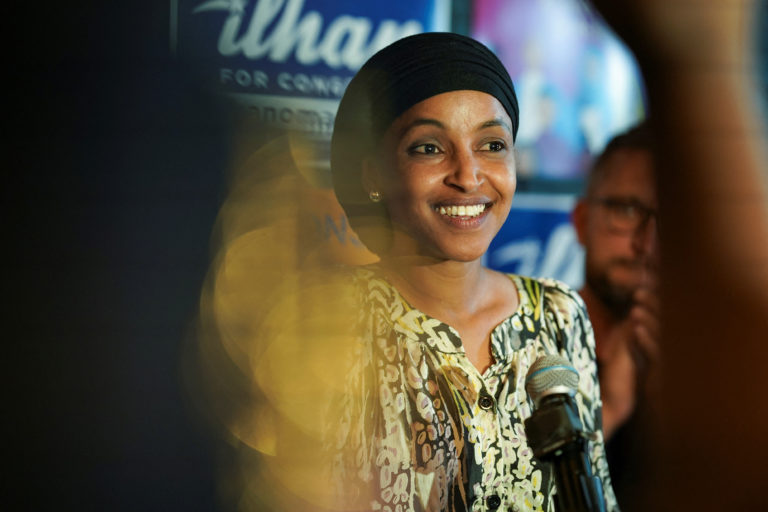


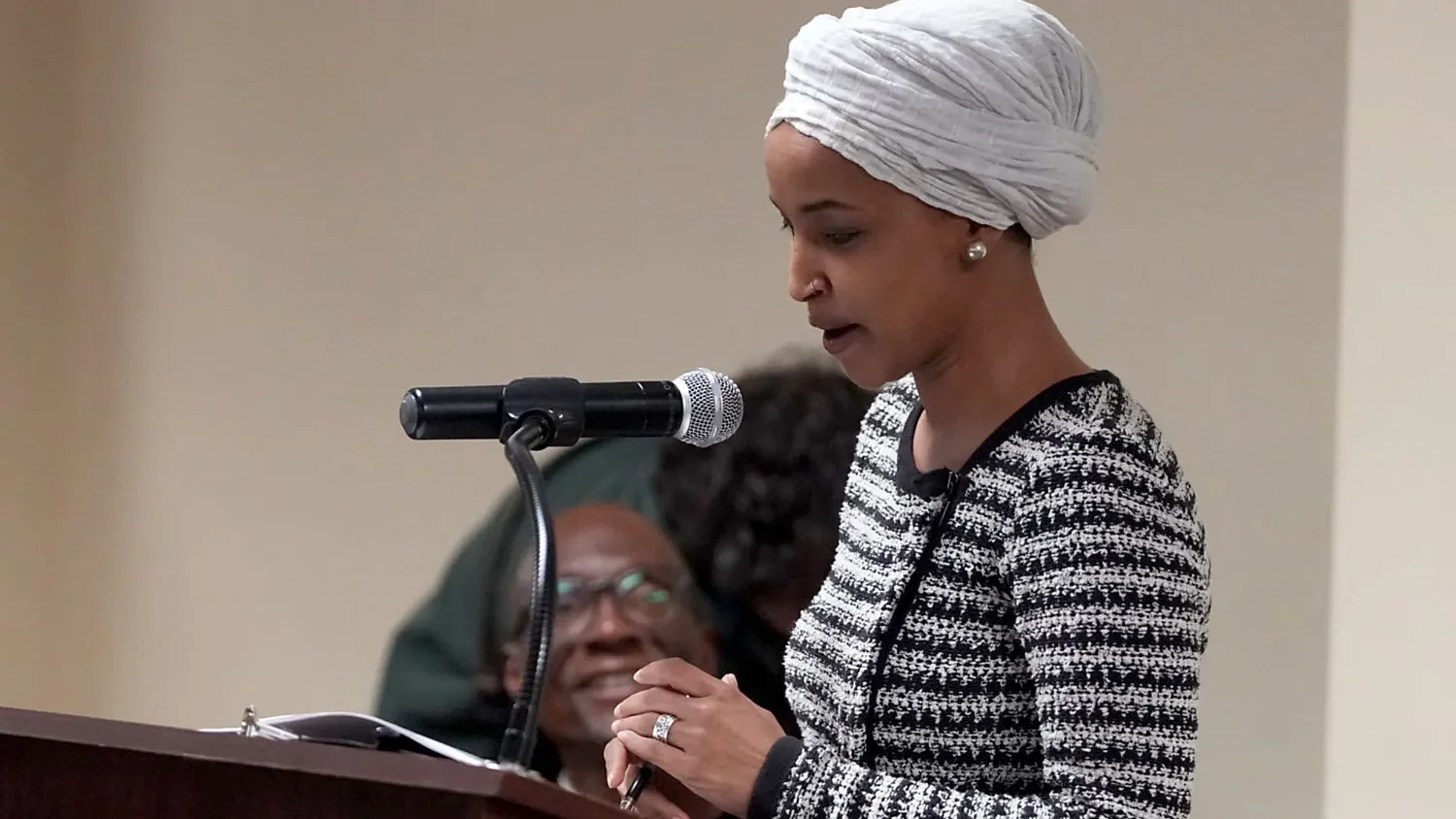
In 2016, Ilhan Omar was elected to the Minnesota House of Representatives. That victory was historic.
She became:
The first Somali-American legislator in the United States
One of the first Muslim women elected to a state legislature
Her win reflected demographic shifts in Minnesota and growing political participation within immigrant communities.
At the state level, she focused on issues such as:
Criminal justice reform
Affordable college tuition
Renewable energy
Protections for working families
Her legislative style combined progressive priorities with personal narrative, often referencing her own journey as a refugee.
Election to the U.S. House of Representatives
In 2018, Omar ran for Minnesota’s 5th Congressional District seat, which includes Minneapolis. She won the election and became a member of the U.S. House of Representatives.
Her victory marked several historic firsts:
One of the first two Muslim women elected to Congress
The first Somali-American member of Congress
One of the first women of color to represent Minnesota at the federal level
She joined a freshman class of lawmakers that included figures such as Alexandria Ocasio-Cortez, a group often described as reshaping the generational profile of Congress.
Omar quickly became a nationally recognized figure—both for her policy positions and for controversies surrounding some of her remarks on foreign policy and U.S. politics.
Policy Priorities in Congress


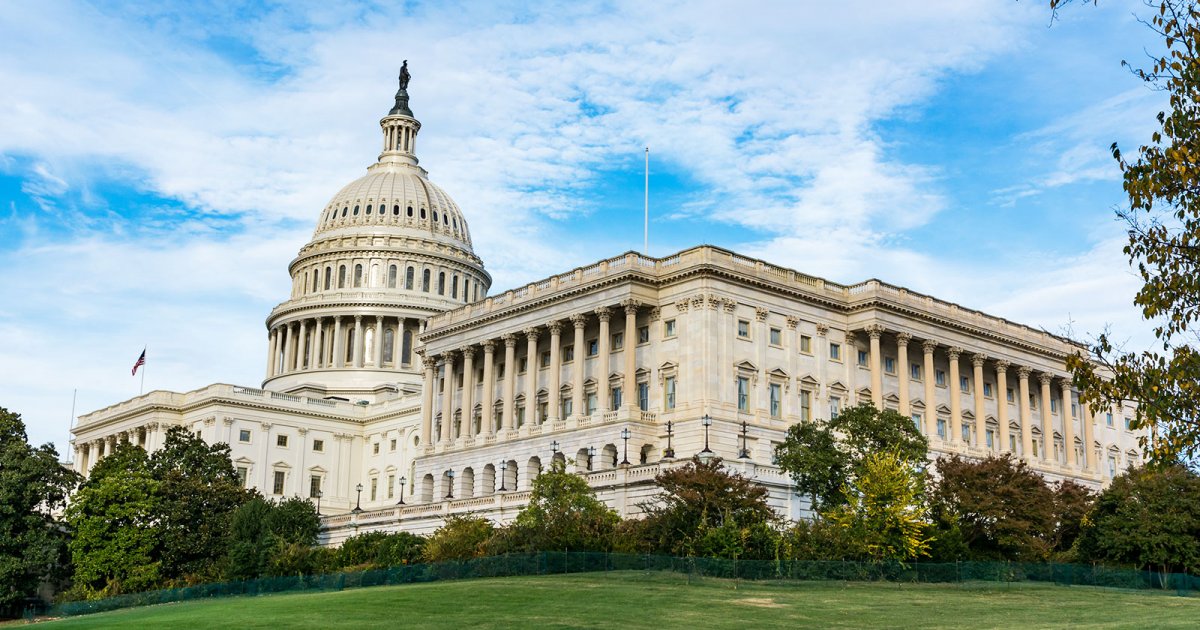

As a member of Congress, Omar has advocated for:
Expanded healthcare access
Student debt relief
Immigration reform
Climate change action
Human rights accountability
Her background as a refugee has influenced her positions on asylum policy, border enforcement, and international humanitarian issues.
She has also been an outspoken critic of certain aspects of U.S. foreign policy, particularly in relation to the Middle East and Africa.
Public Debate and Controversy
Omar’s tenure in Congress has not been without controversy. Some of her comments regarding U.S. foreign policy and Israel have drawn criticism from both Republicans and members of her own party.
These controversies have led to:
Formal House debates
Public condemnations
Intense media scrutiny
Supporters argue that she brings needed perspective to global policy discussions. Critics contend that some statements crossed lines or required clarification.
Regardless of viewpoint, her presence has sparked national conversations about free speech, identity, religion, and political boundaries.
The Broader Significance of Her Story
Ilhan Omar’s trajectory—from refugee camp to Congress—represents a striking arc within the American political landscape.
It highlights several broader themes:
1. The American Refugee Resettlement System
Her journey underscores how refugee programs can shape long-term civic participation.
2. Representation in Government
Omar’s election signaled increasing diversity in federal office.
3. The Intersection of Identity and Politics
As a Muslim, Somali-American woman in Congress, she occupies multiple identities that influence both her support base and her critics.
Minnesota as Political Ground Zero
Minnesota’s 5th District has long leaned progressive. Its voters have consistently supported Democratic candidates, which has provided Omar with a stable electoral base.
However, like many urban districts across the country, it is also politically engaged and vocal—ensuring active debate on local and national issues.
Her repeated reelections demonstrate continued support among constituents, even amid national controversy.
The Power of Narrative
Personal narrative plays a powerful role in American politics.
Omar’s story resonates with:
Immigrant communities
Refugee families
Young women entering politics
Progressive activists
At the same time, it has drawn scrutiny from those skeptical of her policy positions.
But few can deny that her background adds a distinctive dimension to congressional discourse.
A Symbol of a Changing America
The United States has long described itself as a nation of immigrants. Omar’s rise reflects the reality that immigrant communities are not only contributing economically and culturally—but also politically.
Her election signals generational shifts:
Younger lawmakers
More diverse representation
Broader discussions of identity
It also illustrates the growing political engagement of Somali-American communities nationwide.
Final Thoughts
Ilhan Omar’s background as a refugee and her rise to Congress represent one of the more remarkable political journeys in recent American history.
From a childhood shaped by civil war and displacement to serving in the U.S. House of Representatives, her story reflects resilience, opportunity, and ongoing debate about the direction of American democracy.
Whether viewed through the lens of inspiration, policy analysis, or political controversy, her path underscores a central truth: the American political landscape continues to evolve.
And in that evolution, stories like hers occupy an increasingly visible place.
Her journey is not just about one individual—it’s about how identity, migration, and civic engagement intersect in a changing nation.


0 comments:
Enregistrer un commentaire