
From Poverty and Bullying to the Oscars – The Actress Who Refused to Break
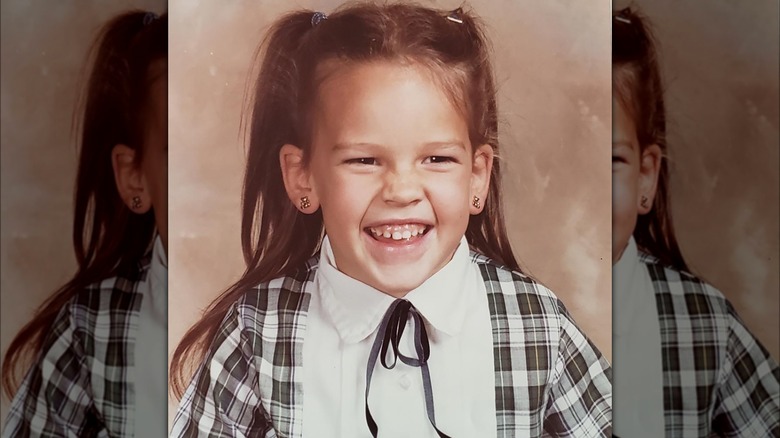

Before the standing ovations.
Before the gold statues.
Before her name was called on Hollywood’s biggest night.
There was a trailer park.
There were hand-me-down clothes.
There were classmates who mocked her, dismissed her, underestimated her.
And there was a young girl who refused to break.
This is the story of Hilary Swank — a two-time Academy Award winner who rose from poverty and bullying to become one of the most respected actresses of her generation. But her story isn’t just about awards. It’s about resilience. It’s about grit. It’s about choosing not to let the world define your worth.
Growing Up Without a Safety Net
Hilary Swank was born in Lincoln, Nebraska, and raised in a trailer park in Bellingham, Washington. Her family struggled financially. Stability was fragile. Resources were limited.
She has spoken openly about growing up poor — about feeling the social divide between herself and her peers. Poverty isn’t just about money. It’s about isolation. It’s about watching other kids have what you don’t. It’s about internalizing a sense of “less than.”
School wasn’t a refuge.
Swank was bullied. Teased for her clothes. Dismissed for her background. She didn’t fit neatly into the social hierarchies that often dominate adolescence.
But even as a child, she had something that couldn’t be mocked away: determination.
Finding Escape Through Performance
While life outside felt unstable, performance became her anchor.
She joined school plays. She competed in swimming and gymnastics. She discovered that in structured spaces — on stage, in competition — effort mattered more than status.
Acting, in particular, offered something transformative.
On stage, she could be someone else. Stronger. Louder. Braver. It was both escape and empowerment.
Her mother saw the spark.
When Hilary was a teenager, her parents divorced. With limited money but unlimited belief, her mother made a bold decision: they would move to Los Angeles so Hilary could pursue acting seriously.
They lived in their car for a period of time.
That detail is often repeated — and for good reason. It encapsulates the risk. The hunger. The refusal to accept limitation.
A mother and daughter sleeping in a vehicle, holding onto a dream that seemed statistically improbable.
Rejection, Rejection, Rejection
Hollywood did not roll out a red carpet.
Swank auditioned constantly — and was rejected constantly.
Casting directors told her she wasn’t pretty enough. Not glamorous enough. Not marketable enough.
She landed small roles in television, including a stint on Beverly Hills, 90210, but was written off the show after a short time. Fired.
For many aspiring actors, that might have been the breaking point.
You move to Los Angeles.
You struggle.
You finally get a break.
And then you’re told you’re not enough.
But Swank had already endured bullying. Poverty. Instability. She had built a tolerance for rejection early in life.
She didn’t interpret dismissal as destiny.
She kept going.
The Role That Changed Everything
In 1999, she was cast in Boys Don’t Cry, portraying Brandon Teena, a transgender man navigating identity and violence in rural America.
The role required total commitment — emotional, physical, psychological.
Swank reportedly lived as a man for weeks to prepare. She cut her hair. Lowered her voice. Immersed herself completely.
At the time, she was still financially struggling. She earned a modest salary for the film. But she chose the role not for money — for meaning.
The performance was raw. Unflinching. Devastating.
And it stunned Hollywood.
In 2000, Hilary Swank won her first Academy Award for Best Actress.
She was 25 years old.
From living in a car to standing on the Oscar stage in less than a decade.
“I’m Just a Girl from a Trailer Park”
In her acceptance speech, she said, “I’m just a girl from a trailer park who had a dream.”
The line resonated worldwide.
It wasn’t self-deprecation. It was acknowledgment.
She didn’t erase her origins. She carried them with her.
That authenticity distinguished her. She wasn’t manufactured. She was forged.
Refusing to Be Typecast
After winning an Oscar, many actors pivot toward glamour roles or high-profile franchises.
Swank chose complexity instead.
She gravitated toward characters marked by struggle, depth, and transformation.
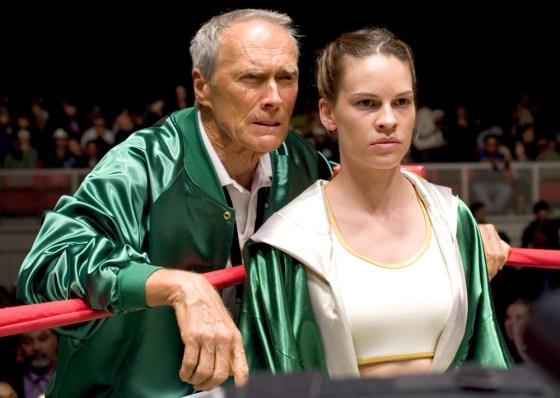
In 2004, she starred in Million Dollar Baby, directed by Clint Eastwood. She portrayed Maggie Fitzgerald, an underdog boxer fighting for recognition in a male-dominated sport.
The role demanded physical rigor. Swank trained intensely, building muscle and endurance. She committed fully — again.
The performance earned her a second Academy Award for Best Actress.
Two Oscars before age 31.
Yet she remained grounded. Measured. Private.
The Strength Beneath the Spotlight
What makes her story compelling isn’t just the awards. It’s the throughline of resilience.
Swank’s journey highlights a crucial truth:
Talent opens doors.
Resilience keeps you walking through them.
Bullying could have convinced her she was unworthy.
Poverty could have limited her imagination.
Rejection could have ended her pursuit.
Instead, each obstacle strengthened her resolve.
She refused to internalize the world’s dismissal.
The Psychology of Not Breaking
Why do some people shatter under pressure while others bend and endure?
Psychologists often point to several resilience factors:
Supportive belief from at least one person.
Swank’s mother believed in her fiercely.Sense of purpose.
Acting wasn’t a hobby. It was a calling.Willingness to endure discomfort.
Living in a car. Auditioning endlessly. Training relentlessly.Identity beyond circumstance.
She didn’t see herself as “poor” or “bullied.” She saw herself as determined.
Resilience is not the absence of pain. It is the refusal to let pain define the ending.
The Price of Persistence
Success stories often sound clean in retrospect. But persistence is messy in real time.
There are moments of doubt.
Moments of exhaustion.
Moments of wondering whether the effort is foolish.
Swank has spoken about periods when roles dried up after her Oscar wins. Fame does not immunize actors against industry volatility.
She continued choosing projects thoughtfully — sometimes stepping away from Hollywood to care for her father when he underwent a lung transplant.
That decision reflects another layer of strength: knowing when to prioritize family over career momentum.
Beyond the Awards
Hilary Swank’s legacy extends beyond trophies.
She represents a narrative rarely centered in Hollywood glamour: the working-class outsider who breaks through without compromising authenticity.
She didn’t conform to a stereotype of stardom. She didn’t rely solely on beauty or charisma. She built her reputation on depth, discipline, and emotional honesty.
In an industry often driven by image, she anchored herself in craft.
The Cultural Impact
Her Oscar wins were more than personal triumphs.
They challenged assumptions about who belongs at the top.
A girl from a trailer park.
A former kid living in a car.
A young woman once told she wasn’t “enough.”
Standing twice at the pinnacle of the film world.
That visibility matters.
Representation isn’t just about race or gender — though those are critical. It’s also about class. About proving that origin does not dictate outcome.
Lessons from a Life Unbroken
Hilary Swank’s journey offers enduring lessons:
1. Your beginnings do not confine your potential.
Circumstances shape you — but they do not seal your fate.
2. Rejection is information, not identity.
Being told “no” doesn’t mean you are nothing.
3. Discipline compounds over time.
Years of small effort create “overnight” success.
4. Strength is quiet.
Resilience doesn’t always roar. Sometimes it simply persists.
5. Refusing to break is an act of defiance.
Especially when the world expects you to.
The Girl Who Stayed Standing
Imagine the teenage Hilary — teased, underestimated, financially strained — being told that one day she would hold two Oscars.
It would have sounded absurd.
Yet she didn’t need the certainty of success to keep moving. She needed belief.
Belief in her craft.
Belief in her work ethic.
Belief in something beyond immediate circumstance.
That belief became her backbone.
A Broader Reflection
We are drawn to stories like hers because they challenge fatalism.
They disrupt the narrative that privilege is the only gateway to achievement.
They remind us that while not everyone who struggles will win an Oscar — resilience itself is a victory.
For every public award, there are thousands of private battles.
Swank’s story is simply one that unfolded on a visible stage.
From Survival to Significance
The arc from poverty and bullying to the Academy Awards is not just cinematic — it is symbolic.
It represents the journey from survival to significance.
From being overlooked to being celebrated.
From sleeping in a car to standing under stage lights.
But perhaps the most important transformation wasn’t external.
It was internal.
She refused to let early hardship calcify into bitterness.
She refused to let rejection become prophecy.
She refused to let bullying define her self-worth.
She refused to break.
Final Scene
Awards can tarnish.
Headlines fade.
Box office numbers blur over time.
But resilience endures.
Hilary Swank’s story isn’t just about Hollywood glory. It’s about the power of perseverance in the face of humiliation, scarcity, and dismissal.
It’s about a young girl who learned early that the world can be unkind — and decided, anyway, to pursue her dream with relentless focus.
And in doing so, she proved something far more important than star power:
Strength is not born from ease.
It is forged in the moments when breaking would be easier — but you choose, stubbornly, bravely, to remain standing.


0 comments:
Enregistrer un commentaire